
Three terms people mix up
Search for "meal prep" and you'll run into "meal planning," "batch cooking," and — if you've found Mealpreper Guide — "capsule meal prep." They sound like synonyms. They're not.
Each term describes a different piece of the same puzzle: deciding what to eat, cooking it in advance, and avoiding the boredom of eating the same thing five days straight.
Here's what each one actually means, how they compare, and which one solves the problem you actually have.
What is meal planning?
Meal planning is the process of deciding what you'll eat over a given period — usually a week — before you've cooked anything at all. It's a decision-making exercise, not a cooking one.
You're deciding:
- which meals you'll eat on which days
- what you need to buy
- how much time each meal will take to cook
The output: a plan, a grocery list, and a cooking schedule. Not food.
Meal planning answers the question "what am I eating this week?"
It's useful because it helps you:
- avoid staring into an empty fridge every night
- shop once instead of running to the store daily
- control your food budget and skip impulse takeout orders
- eat a more balanced diet instead of whatever's left in the pantry
The limit: meal planning by itself doesn't save any cooking time. You're still cooking every day — you just know in advance what you're making.
What is meal prep?
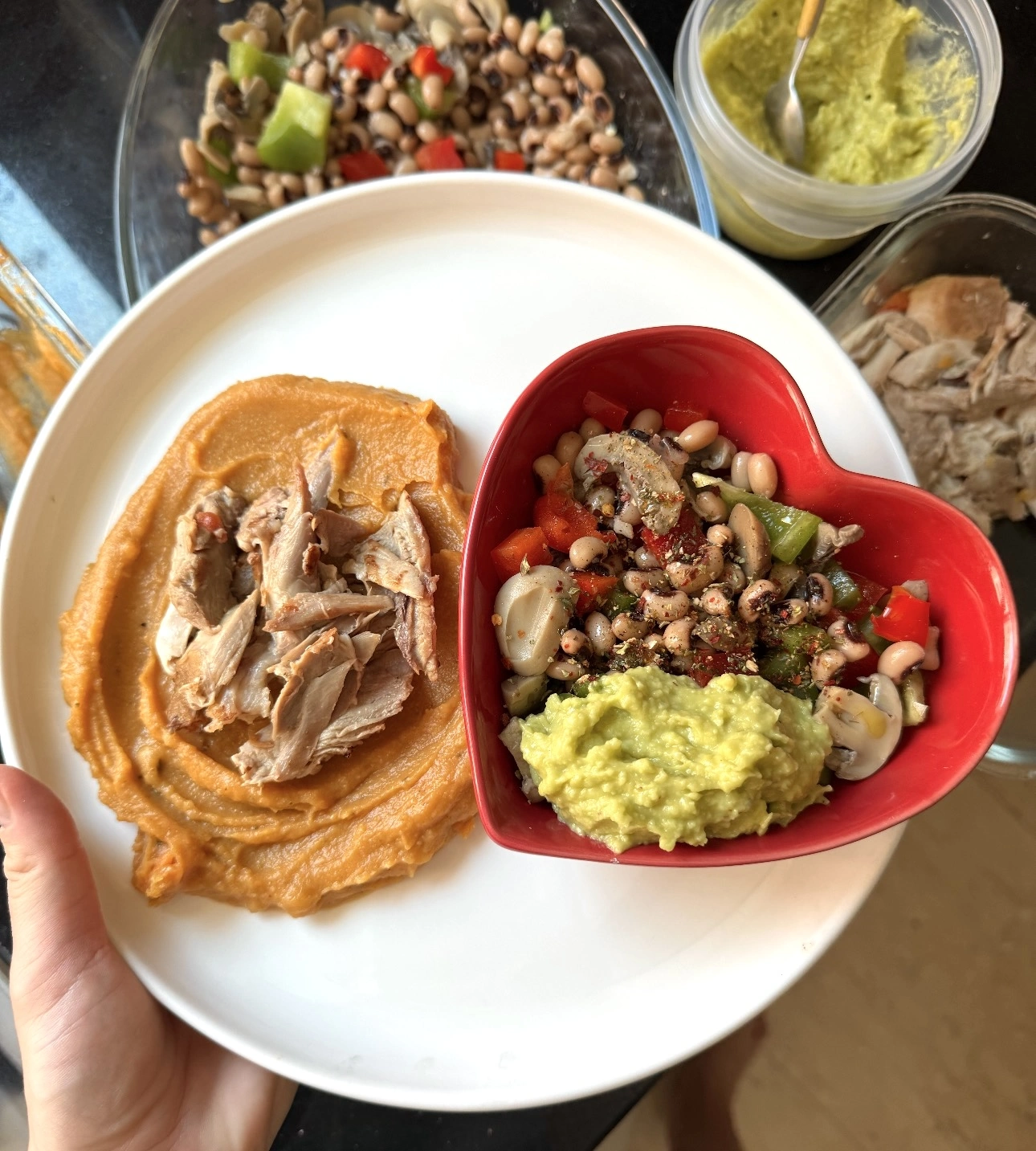
Meal prep — short for meal preparation — is food you cook in advance and store in the fridge or freezer to eat over the next several days.
Unlike meal planning, meal prep is a physical act. You cook once, ahead of time, instead of cooking before every single meal.
This isn't new. It's what home cooks have always done, long before "meal prep" became a hashtag: a pot of soup that lasts the whole week, a double batch of meatballs frozen in portions. Today it has a name — batch cooking — but it's the same instinct your grandmother had.
In its modern form, meal prep usually looks like this: on a weekend, you cook a handful of complete dishes, portion them into containers, and reheat one each day.
The output: ready-to-eat meals waiting in the fridge.
Meal prep answers the question "how do I stop cooking every day?"
The limit: if you prep whole dishes ahead of time, they get old fast. The same casserole or the same chicken-and-rice bowl, five days in a row, wears thin by day three. Some dishes also don't reheat well and lose texture or flavor. And if you're cooking for two people across five days, you need 10+ containers ready to go from the very first prep session.
What is capsule meal prep?
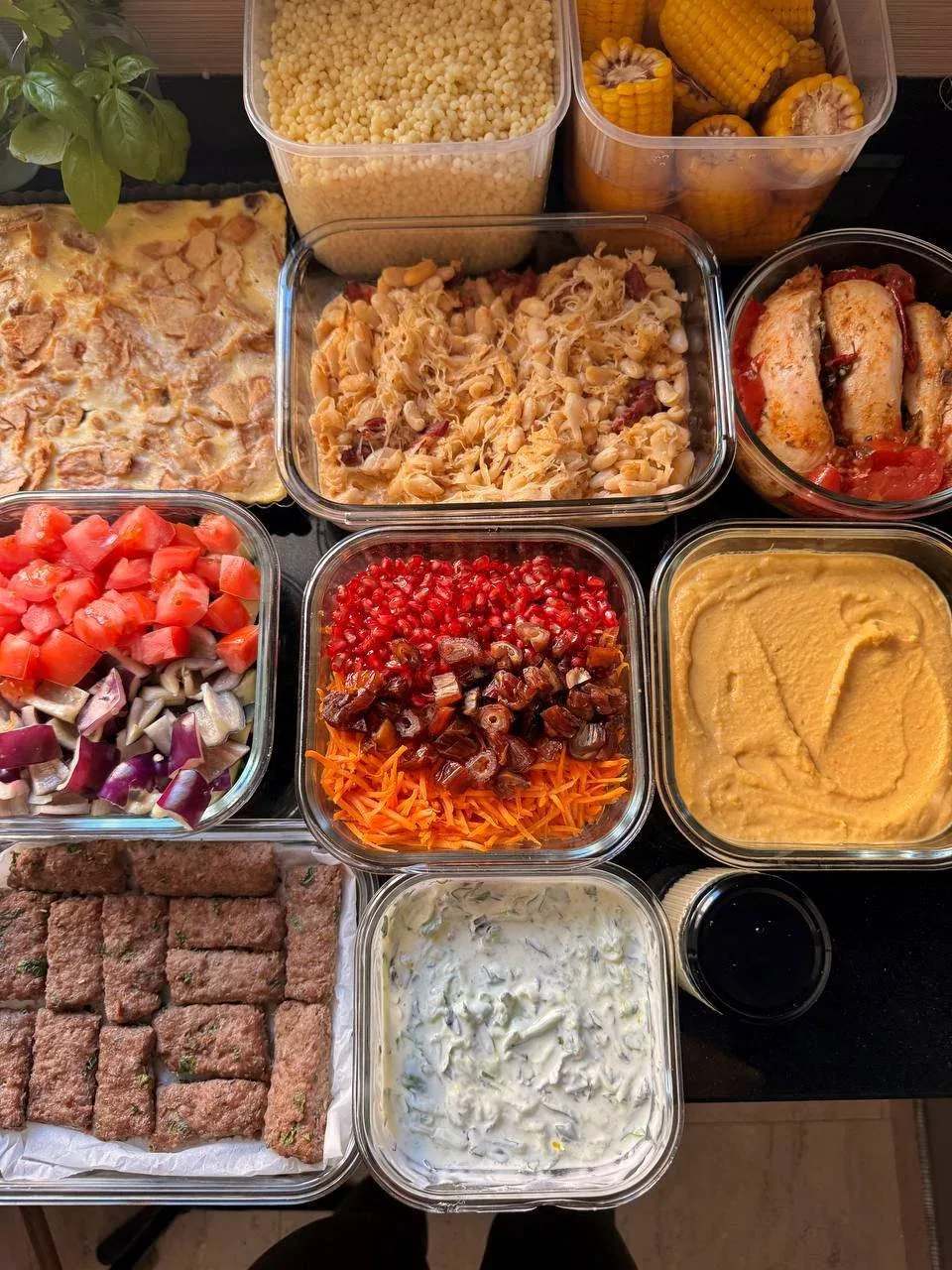
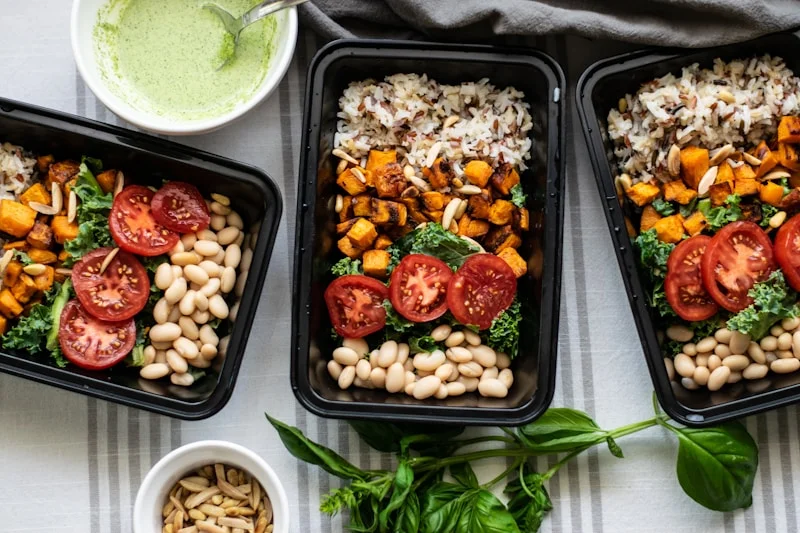
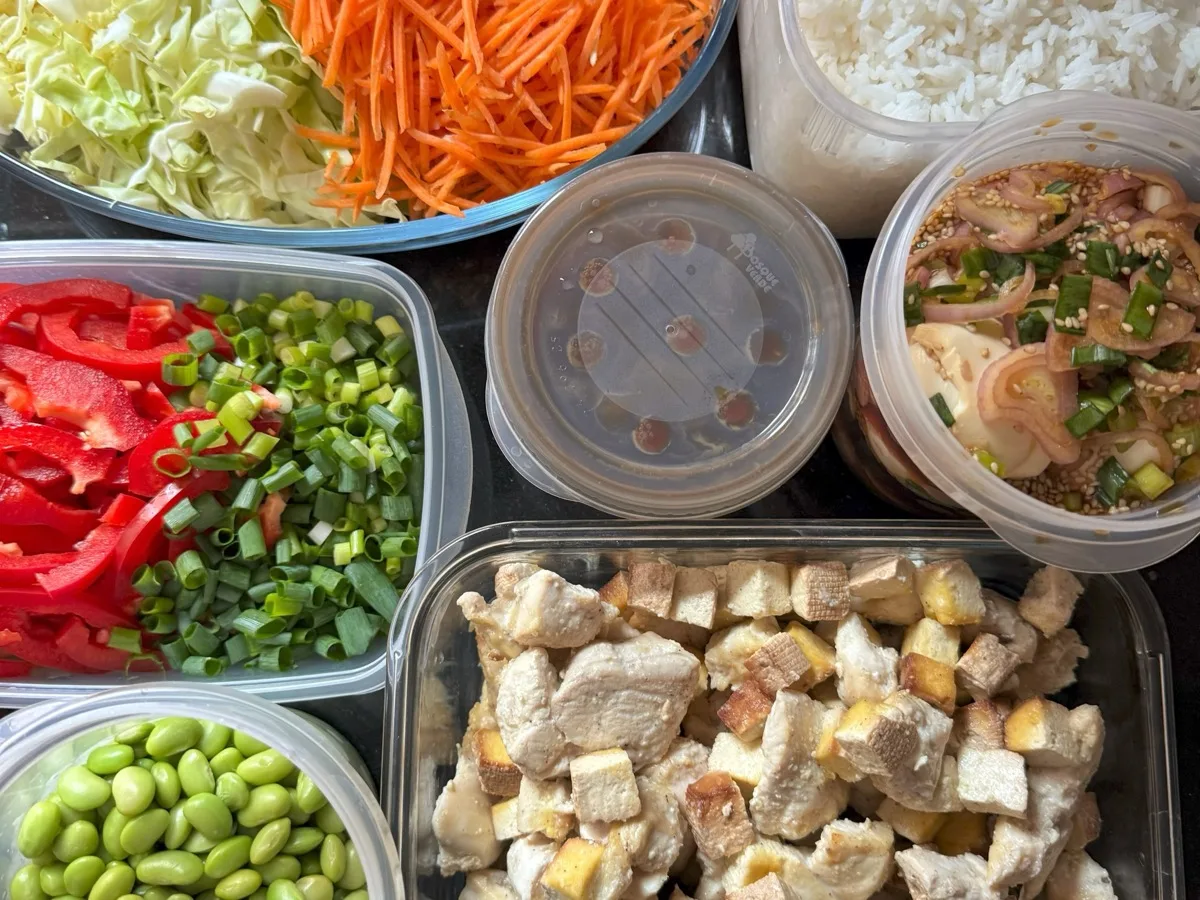
Capsule meal prep is a system of prepping individual components instead of complete dishes — proteins, grains, vegetables, and sauces, each cooked separately. You then assemble different plates from those components every day.
The name borrows from the "capsule wardrobe" idea: a handful of versatile basics that combine into many different outfits. Food works the same way — a few base components combine into many different meals. We cover the method in full depth in our complete guide to capsule meal prep — here's the short version.
The output: a set of ready components you mix and match for 3–5 days.
Capsule meal prep answers the question "how do I stop cooking daily without eating the same thing twice?"
Example: in a single prep session, you roast chicken, cook rice and chickpeas, roast two different vegetables, and make two sauces.
From that one set of components:
- Monday: a bowl with rice, chicken, and roasted vegetables
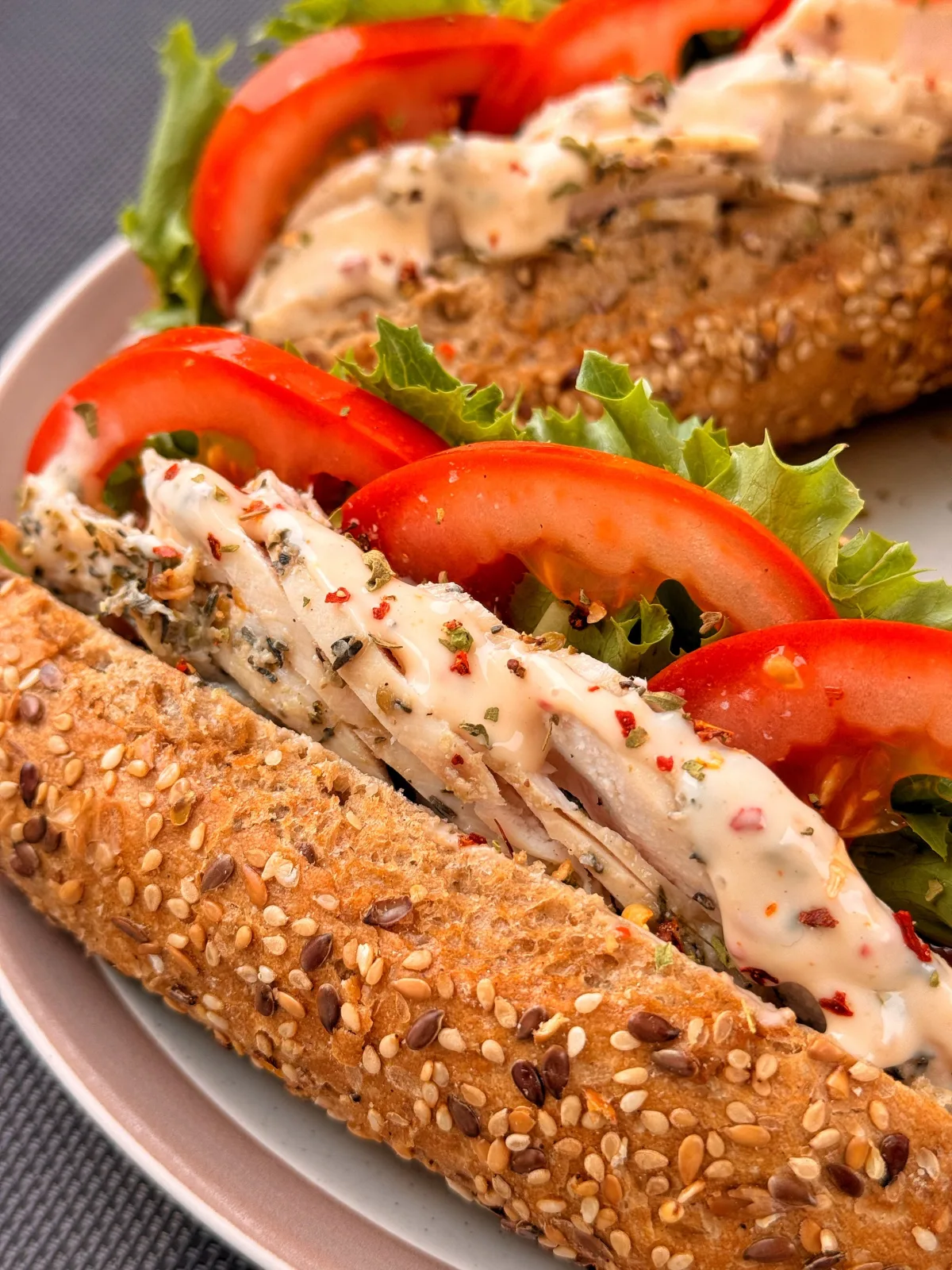
- Tuesday: a wrap with chicken, greens, and sauce
- Wednesday: a chickpea salad with vegetables and dressing
- Thursday: pasta with chicken and tomato sauce
- Friday: a fried-egg plate with vegetables and chickpeas
The mechanism behind capsule meal prep is parallel cooking. While the oven roasts your protein, the stove cooks your grain, and a second burner handles the vegetables. You're not cooking in sequence — you're running several processes at once. That's what compresses your daily kitchen routine down to one focused session every few days.
Comparing the three approaches
| Meal Planning | Meal Prep | Capsule Meal Prep | |
|---|---|---|---|
| What it is | A decision and a grocery list | Complete meals cooked ahead | Individual components cooked ahead |
| Prep time | 20–40 min to plan | 1–4 hours depending on menu | 1–4 hours depending on menu |
| Weeknight time | Still cooking daily | 5–10 min to reheat | 5–10 min to assemble |
| Variety | Depends on the plan | Low (one dish = one dish) | High (one batch = many combinations) |
| Shelf life | — (it's a plan) | 2–4 days | 3–5 days |
| Starting difficulty | Low | Medium | High |
| Result | You know what to eat | Food is ready | Food is ready + variety |
These approaches aren't competing with each other
Meal planning, meal prep, and capsule meal prep aren't three rival systems. They're three layers of the same logic.
In practice, the full system looks like this:
Step 1: Plan — decide which components you're cooking this week. Grocery list. Time blocked off.
Step 2: Prep — cook everything at once: oven, stovetop, and parallel processes running together.
Step 3: Assemble — open the fridge each day and build a plate from ready components in a new combination.
Planning without prepping — you know the plan, but you're still cooking daily.
Prepping without planning — chaotic, and you risk buying the wrong things.
Capsule meal prep without the first two steps simply doesn't exist.
Which approach fits you right now
Start with meal planning if: you've never thought about food in advance, or you frequently spend money on impulse takeout.
Add meal prep if: you've already got planning down, but you're still cooking every day and want to cut that time.
Move to capsule meal prep if: you've tried traditional meal prep before, but got bored eating the same thing all week.
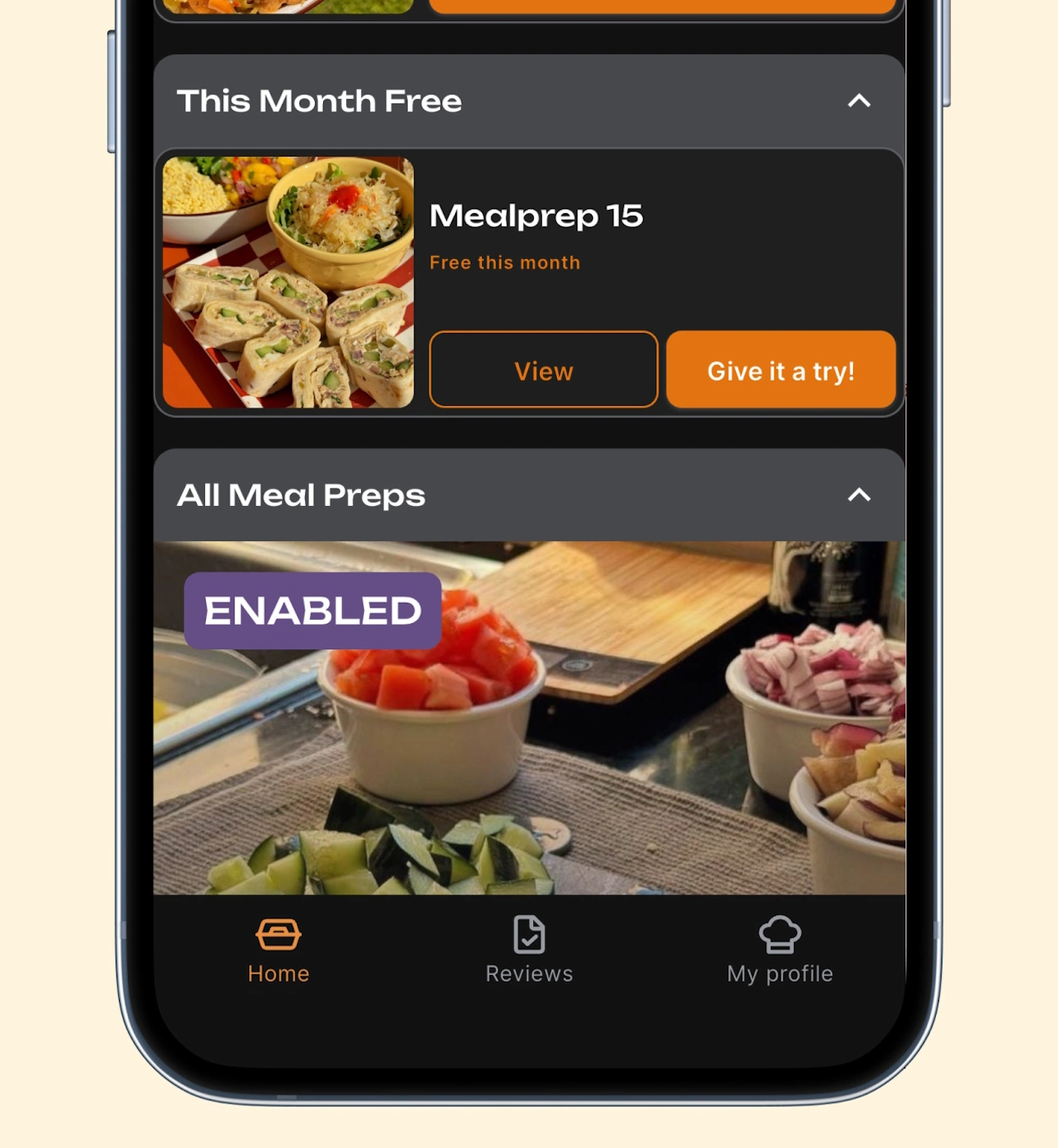
The one place capsule meal prep genuinely takes effort is building your first menu from scratch. Without meal-planning experience, that's a real hurdle: which components to pick, how to combine them, how much to cook for how many days. That's exactly why we build tested, ready-made capsule menus — so you can just cook, without planning from zero. And one menu is always free, so you can try the system with zero commitment.
Why we focus on capsule meal prep
At Mealpreper Guide, we're built around capsule meal prep — not because it's "the right" way to do it, but because it solves the main limitation of traditional meal prep: monotony.
In practice, people don't quit meal prep because they run out of time or find it too hard. They quit because by day three, the same chicken-and-rice bowl just doesn't sound good anymore.
Capsule meal prep solves this structurally: components stay separate, combinations multiply, boredom disappears.
We cook this way ourselves, and we know it works. But we also know any system has to fit your actual lifestyle and taste. That's why we want as few barriers as possible to trying it — no timed trial, no subscription just to see if it's for you. One menu every month, completely free. Try it, see if it fits your rhythm and your taste — then decide.
Summary
Three approaches, three questions:
- Meal planning — "What am I eating this week?"
- Meal prep — "How do I stop cooking every day?"
- Capsule meal prep — "How do I stop cooking daily without eating the same thing twice?"
Each one builds on the last. The full system is all three layers together.
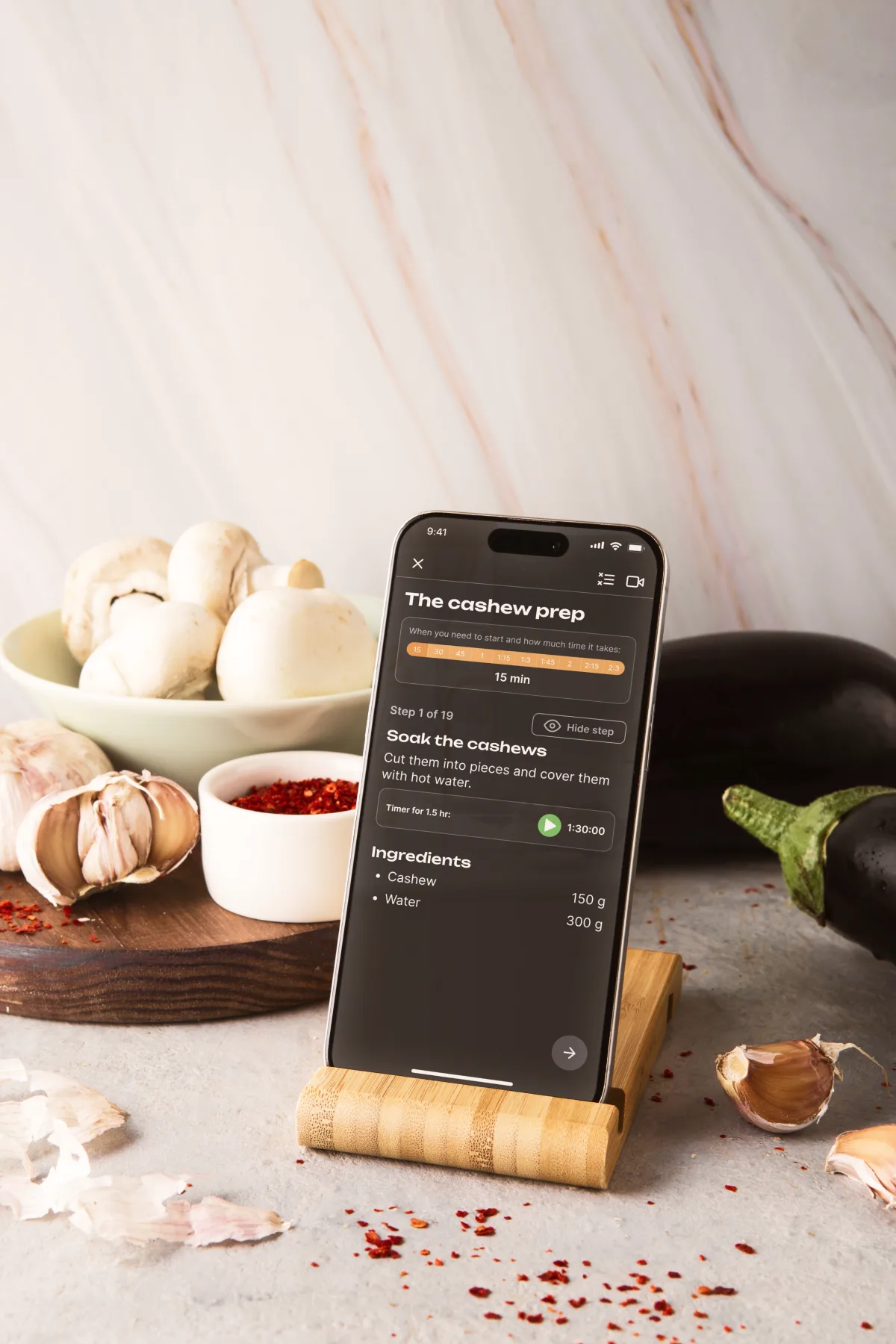
Mealpreper Guide is an app for organizing home cooking around the capsule meal prep method.
Frequently asked questions
Is meal prep the same as meal planning?
No. Meal planning is a decision and a plan. Meal prep is physically cooking food in advance. You can plan without prepping and prep without planning, but they work best together.
What is meal planning?
Meal planning is the process of deciding in advance what you'll eat over the coming week, factoring in groceries, time, and budget.
What is batch cooking?
Batch cooking means cooking in large quantities — it's what home cooks have always done, like making a pot of soup that lasts the whole week. In modern usage it's basically a synonym for meal prep, with the emphasis on volume rather than variety.
What is capsule meal prep?
Capsule meal prep is a system where you cook individual components — proteins, grains, vegetables, sauces — rather than whole dishes. Those components combine into different meals each day, giving you variety without cooking daily.
How long does capsule meal prep take?
One prep session takes 1–4 hours depending on the menu. After that, assembling a plate takes 5–10 minutes a day for 3–5 days.
Do I have to follow the Harvard Healthy Plate model?
No, but it's a useful template for balance: protein + carbs + vegetables + a bit of fat.
What's the easiest way to start meal prepping for the first time?
The simplest start: one protein + one grain, prepped for 3 days. Or just use a ready-made capsule menu in the app — one is always free.